PCOS Symptoms Every Woman Should Know
Polycystic Ovary Syndrome commonly known as PCOS is one of the most prevalent hormonal disorders affecting women of reproductive age in India today. Yet despite how common it is, PCOS remains significantly underdiagnosed, often because its symptoms are dismissed as normal, ignored, or mistakenly attributed to stress or lifestyle changes. The truth is, the PCOS symptoms every woman should know are not always obvious and recognizing them early can make a profound difference in long-term health outcomes. At Sri Sai Women & Children's Clinic in Gopanpally, Hyderabad, Dr. Vanisree Padige a highly experienced gynaecologist and obstetrician with 16 years of expertise in women's health and hormonal disorders helps women understand, identify, and manage PCOS with compassion and clinical precision. If you are in Gopanpally, Nallagandla, Tellapur, Serilingampally, or anywhere in Hyderabad, this guide is your starting point.
What Is PCOS (Polycystic Ovary Syndrome)?
PCOS is a complex hormonal condition in which the ovaries produce an excess of androgens (male hormones) that are normally present in women in small amounts. This hormonal imbalance disrupts the regular release of eggs from the ovaries (ovulation), often leading to the formation of multiple small fluid-filled sacs called follicles or cysts on the ovaries. These cysts do not rupture as healthy follicles should, which is where the name "polycystic" comes from.
It is important to note that not every woman with PCOS will have cysts on her ovaries, and not every woman with ovarian cysts has PCOS. The diagnosis is based on a combination of symptoms, blood hormone levels, and ultrasound findings which is why consulting a qualified gynaecologist like Dr. Vanisree Padige in Gopanpally, Hyderabad, is essential for an accurate diagnosis.
PCOS affects approximately 1 in 5 women in India making it one of the leading causes of irregular periods, fertility issues, and hormonal imbalance in Indian women. Despite its prevalence, it is estimated that up to 70% of women with PCOS remain undiagnosed.
Causes and Risk Factors of PCOS
The exact cause of PCOS is not fully understood, but research points to a combination of genetic, hormonal, and lifestyle factors. Understanding these can help in both prevention and management.
Hormonal Factors
Fertilization occurs, typically around Week 2 of your cycle. The fertilized egg travels to the uterus and implants in the uterine lining by Week 3–4. Many women do not yet know they are pregnant at this stage. A home pregnancy test will typically show positive from Week 4 onwards when hCG (human chorionic gonadotropin) levels are detectable.
- Excess Androgen Production: The ovaries produce too much testosterone and other androgens, disrupting the normal menstrual cycle.
- Insulin Resistance: Up to 70% of women with PCOS have insulin resistance a condition where the body's cells do not respond properly to insulin. High insulin levels trigger the ovaries to produce more androgens.
- Elevated LH Levels: Luteinizing hormone (LH) levels are often disproportionately high in women with PCOS, further disrupting ovulation.
- Low Progesterone: Anovulation (lack of ovulation) leads to low progesterone, causing irregular or absent periods.
Genetic and Lifestyle Risk Factors
- Family history of PCOS (mother, sister, or aunt affected)
- Obesity or being overweight excess body fat worsens insulin resistance and androgen excess
- Sedentary lifestyle with little physical activity
- Diet high in refined carbohydrates, sugar, and processed foods particularly common in urban India
- Chronic stress elevates cortisol, which aggravates hormonal imbalance
- Exposure to endocrine-disrupting chemicals (plastics, pesticides)
PCOS Symptoms Every Woman Should Know
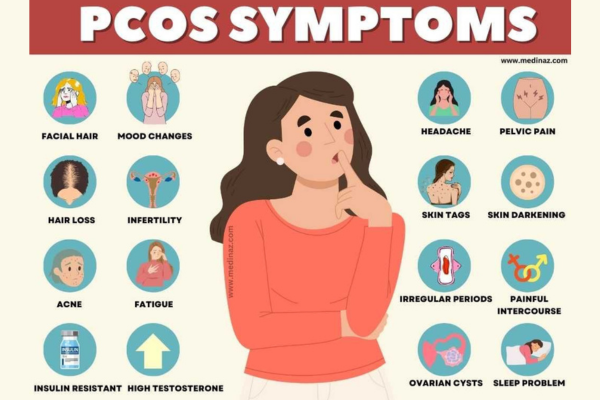
PCOS is often called a "silent" condition because its symptoms can be subtle, gradual, or easily attributed to other causes. Below are the key PCOS symptoms every woman especially Indian women in their teens, twenties, and thirties should be aware of.
1. Irregular or Absent Periods (Oligomenorrhea / Amenorrhea)
This is the most common and recognisable PCOS symptom. Women with PCOS may have fewer than 8 menstrual cycles per year, cycles that are unpredictable in timing, or periods that last unusually long or are very light. Many Indian women dismiss irregular periods as stress-related, but persistent irregularity lasting more than 3 months warrants a gynaecological evaluation. Dr. Vanisree Padige at Sri Sai Clinic, Gopanpally, sees this as the most frequently overlooked early warning sign of PCOS.
2. Excess Facial and Body Hair (Hirsutism)
Elevated androgens in women with PCOS often cause unwanted hair growth in areas typically associated with male hair patterns the upper lip, chin, jawline, chest, abdomen, inner thighs, and lower back. Hirsutism affects approximately 70% of women with PCOS. In Indian women, who may have naturally darker body hair, this symptom can be particularly distressing and is often a strong indicator of hormonal imbalance.
3. Acne and Oily Skin
PCOS-related acne is characteristically hormonal it tends to appear along the jawline, chin, lower cheeks, and neck, and may be cystic (deep, painful nodules rather than surface whiteheads). Unlike teenage acne, PCOS acne in adult women does not respond well to standard skincare products alone and often persists beyond the twenties. Excessively oily skin is also a hallmark symptom due to androgen stimulation of sebaceous glands.
4. Hair Thinning and Scalp Hair Loss (Female Pattern Baldness)
While PCOS causes excess hair on the face and body, it can simultaneously cause hair thinning on the scalp particularly at the crown and along the central parting. This is due to the effect of androgens on scalp hair follicles. Indian women often notice this as increased hair fall during combing, bathing, or styling, and may find that their ponytail has become noticeably thinner. This symptom is frequently mistaken for nutritional deficiency.
5. Weight Gain and Difficulty Losing Weight
Many women with PCOS experience unexplained weight gain particularly around the abdomen or find it extremely difficult to lose weight despite diet and exercise. This is largely driven by insulin resistance, which causes the body to store fat more readily and burn it less efficiently. Even women with PCOS who are not overweight may have disproportionate abdominal fat, which is associated with higher cardiovascular and metabolic risk.
6. Darkening of Skin (Acanthosis Nigricans)
A dark, velvety discolouration of the skin particularly in skin folds such as the neck, underarms, groin, and beneath the breasts is a sign of insulin resistance commonly seen in women with PCOS. This condition is called acanthosis nigricans and is frequently observed in Indian women with PCOS who also have elevated blood sugar levels or are at risk of type 2 diabetes.
7. Difficulty Getting Pregnant (Infertility)
PCOS is one of the leading causes of female infertility in India. Because PCOS disrupts regular ovulation, women with the condition may find it difficult to conceive naturally. However, it is important to note that PCOS does not mean permanent infertility with appropriate medical management, many women with PCOS go on to have successful pregnancies. Dr. Vanisree Padige, with her expertise in hormonal and reproductive health at Sri Sai Women & Children's Clinic, Gopanpally, provides specialized care for women with PCOS who are trying to conceive.
8. Mood Changes, Anxiety, and Depression
The hormonal turbulence of PCOS significantly impacts mental health. Women with PCOS have a higher prevalence of anxiety, depression, mood swings, and low self-esteem often exacerbated by visible symptoms like acne, weight gain, and hair changes. The emotional burden of PCOS is real and valid, and it deserves as much clinical attention as the physical symptoms. If you are experiencing persistent sadness, irritability, or anxiety alongside physical PCOS symptoms, please speak to your doctor.
9. Pelvic Pain
Some women with PCOS experience chronic or intermittent pelvic pain, especially around the time of their period or during ovulation. This can be caused by large or multiple follicles on the ovaries pressing on surrounding structures. While pelvic pain has many possible causes, it should always be evaluated by a gynaecologist particularly when it occurs alongside other PCOS symptoms.
10. Sleep Problems and Fatigue
Women with PCOS frequently report excessive fatigue, low energy, and difficulty sleeping including sleep apnoea (interrupted breathing during sleep), which is more common in women with PCOS than in the general female population. Insulin resistance, elevated androgens, and the psychological weight of managing a chronic condition all contribute to disrupted sleep and persistent tiredness.
Why PCOS Is Particularly Common in Indian Women
Research consistently shows that South Asian women including Indian women have a significantly higher prevalence of PCOS and insulin resistance compared to women of other ethnicities. Several factors contribute to this:
- Genetic predisposition: South Asian women are genetically more prone to insulin resistance, a key driver of PCOS.
- Diet: The traditional Indian diet, while nutritious in its purest form, has shifted in urban areas towards refined carbohydrates (white rice, maida), sugary foods, and processed snacks all of which worsen insulin resistance.
- Sedentary urban lifestyle: Particularly relevant for women in cities like Hyderabad, where long working hours and desk-based jobs reduce physical activity.
- Delayed diagnosis: Cultural taboos around discussing menstrual irregularities, reluctance to consult a gynaecologist for 'minor' symptoms, and a general lack of awareness mean many Indian women live with undiagnosed PCOS for years.
- Stress: Academic pressure, professional demands, and family responsibilities create chronic stress that aggravates hormonal imbalance in Indian women.
Dr. Vanisree Padige at Sri Sai Women & Children's Clinic, Gopanpally, regularly treats women from Gopanpally, Nallagandla, Serilingampally, and Tellapur presenting with PCOS and has observed firsthand how delayed diagnosis leads to more complex health challenges over time.
When to See a Doctor About PCOS
You should consult a gynaecologist if you experience any of the following even if you are unsure whether it is PCOS:
- Your periods are irregular, absent, or unpredictable for more than 3 months
- You have been trying to conceive for more than 6–12 months without success
- You notice unexplained hair growth on your face, chest, or abdomen
- You are experiencing adult acne that does not respond to skincare
- You have significant, unexplained hair thinning on your scalp
- You are gaining weight rapidly around your abdomen despite no major dietary change
- You notice dark skin patches around your neck, underarms, or groin
- You feel persistently fatigued, anxious, or emotionally low alongside physical symptoms
Do not wait for all symptoms to appear before seeking help. Even one or two of the above signs, when persistent, deserve medical evaluation.
How Is PCOS Diagnosed?
PCOS is diagnosed using the Rotterdam Criteria, a woman is diagnosed with PCOS if she meets at least 2 of the following 3 criteria:
- Irregular or absent ovulation (evidenced by irregular or absent periods)
- Clinical or biochemical signs of excess androgens (hirsutism, acne, or elevated blood androgen levels)
- Polycystic ovaries visible on ultrasound (12 or more follicles on one or both ovaries)
Diagnostic Tests at Sri Sai Clinic, Gopanpally
Dr. Vanisree Padige conducts a thorough evaluation that typically includes:
- Detailed menstrual and medical history
- Physical examination including BMI, blood pressure, and skin assessment
- Pelvic ultrasound to examine the ovaries
- Hormone panel: LH, FSH, testosterone, DHEA-S, prolactin, thyroid function (TSH)
- Fasting blood sugar and insulin levels
- Lipid profile (cholesterol and triglycerides)
- Anti-Mullerian Hormone (AMH) — a marker of ovarian reserve
PCOS Treatment and Management: What Are Your Options?
While there is currently no permanent cure for PCOS, the condition is very manageable. Treatment is tailored to the individual based on her specific symptoms, health goals (such as regular periods, pregnancy, or managing acne), and overall health profile. Dr. Vanisree Padige at Sri Sai Women & Children's Clinic, Gopanpally, takes a personalized, evidence-based approach to PCOS management.
Lifestyle Changes — The Most Powerful First Step
- Weight Management: Even a 5–10% reduction in body weight can significantly restore ovulation and reduce androgen levels in overweight women with PCOS.
- Diet: A low glycaemic index (low-GI) diet rich in whole grains (brown rice, ragi, oats), legumes, vegetables, and lean proteins helps improve insulin sensitivity. Reduce refined carbs, sugar, and processed foods.
- Exercise: A combination of aerobic exercise (brisk walking, cycling) and strength training, done at least 150 minutes per week, is highly effective in improving insulin resistance and hormonal balance.
- Stress Management: Yoga, pranayama, mindfulness, and adequate sleep all play a meaningful role in managing PCOS symptoms by reducing cortisol levels.
Medical Treatment Options
- Oral Contraceptive Pills (OCPs): For women not trying to conceive, OCPs help regulate periods, reduce androgens, manage acne, and control hirsutism.
- Metformin: An insulin-sensitizing medication commonly prescribed for PCOS to improve metabolic function and restore ovulation.
- Anti-androgen medications: Help reduce facial hair, acne, and scalp hair loss by blocking androgen effects.
- Ovulation Induction: For women trying to conceive, medications like letrozole or clomiphene citrate are used to stimulate ovulation under close medical supervision.
- Topical treatments: For acne and skin pigmentation issues, prescription topical creams may be recommended alongside hormonal treatment.
Why Early Detection of PCOS Symptoms Matters: Long-Term Health Risks
PCOS is not just a reproductive condition — it has far-reaching implications for a woman's long-term health. Left unmanaged, PCOS increases the risk of:
- Type 2 diabetes due to chronic insulin resistance
- Cardiovascular disease elevated cholesterol, hypertension, and metabolic syndrome
- Endometrial (uterine) cancer prolonged absence of periods causes abnormal thickening of the uterine lining
- Obstructive sleep apnoea
- Non-alcoholic fatty liver disease (NAFLD)
- Anxiety and depression if left untreated
- Pregnancy complications including gestational diabetes and preeclampsia in women who conceive with PCOS
This is why recognizing the PCOS symptoms every woman should know and acting on them early is not just about periods or fertility. It is about protecting your health for decades to come.
Internal Links
- Hormonal & Reproductive Health Care at Sri Sai Clinic, Gopanpally
- About Dr. Vanisree Padige – Gynaecologist in Gopanpally, Hyderabad
- Book a PCOS Consultation with Dr. Vanisree Padige
- Painful Periods Aren't Normal – Read More on Women's Health
Conclusion
PCOS is common, but it is not something you have to simply live with. The PCOS symptoms every woman should know from irregular periods and unwanted hair to weight gain, acne, and mood changes are signals your body sends when it needs attention. The earlier you recognize these signs and seek expert care, the more effectively PCOS can be managed and its long-term risks reduced.
You deserve answers, not guesswork. At Sri Sai Women & Children's Clinic in Gopanpally, Hyderabad, Dr. Vanisree Padige provides compassionate, evidence-based care for women with PCOS — from accurate diagnosis and personalized treatment plans to ongoing hormonal support and fertility guidance. With 16 years of experience in gynaecology, obstetrics, and hormonal health, Dr. Vanisree Padige empowers women to make informed decisions about their bodies and their futures.
Whether you are in Gopanpally, Nallagandla, Tellapur, Serilingampally, or anywhere across Hyderabad, you do not have to face PCOS alone. Sri Sai Women & Children's Clinic is here for you at every step of your health journey.
Concerned about PCOS symptoms? Book a consultation with Dr. Vanisree Padige at Sri Sai Women & Children's Clinic, Gopanpally today.
Call: +91 7675024254