High-Risk Pregnancy Explained
Hearing the words "high-risk pregnancy" from your doctor can feel alarming even terrifying. For many expectant mothers in India, it raises a cascade of questions: What does it mean? Will my baby be safe? What do I do differently? The truth is, being classified as a high-risk pregnancy does not mean that something will necessarily go wrong. It means that you and your baby need and deserve a higher level of medical monitoring, specialist expertise, and personalized care throughout your pregnancy journey. At Sri Sai Women & Children's Clinic in Gopanpally, Hyderabad, Dr. Vanisree Padige a highly skilled gynaecologist, obstetrician, and high-risk pregnancy specialist with 16 years of experience provides exactly this: expert, compassionate, and comprehensive care for mothers and babies who need it most. In this blog, Dr. Vanisree Padige explains everything you need to know about high-risk pregnancy what it means, what causes it, what to watch for, and how it is managed so that you can face this journey with knowledge, confidence, and the right support. Whether you are in Gopanpally, Nallagandla, Tellapur, Serilingampally, or anywhere across Hyderabad, this guide is for you.
What Is a High-Risk Pregnancy?
A high-risk pregnancy is one in which the mother, the baby, or both face a higher-than-average chance of developing complications before, during, or after delivery. This classification is not a verdict it is a medical alert that guides your healthcare team to provide more vigilant monitoring and proactive intervention where needed.
High-risk pregnancies require care from a specialist typically an obstetrician with expertise in maternal-fetal medicine or high-risk pregnancy management. Dr. Vanisree Padige at Sri Sai Women & Children's Clinic, Gopanpally, has dedicated a significant portion of her 16-year career to caring for women with high-risk pregnancies, with particular expertise in fetal medicine the specialized field that focuses on the health and development of the baby in the womb.
It is important to understand that many women with high-risk pregnancies go on to deliver healthy babies. The key is early identification, consistent specialist monitoring, and timely intervention when necessary.
What Makes a Pregnancy High-Risk? Causes and Risk Factors
High-risk pregnancy can arise from factors present before pregnancy, conditions that develop during pregnancy, or characteristics of the pregnancy itself. Below is a comprehensive overview of the most common causes and risk factors:
Pre-Existing Medical Conditions in the Mother
Certain health conditions that a woman has before becoming pregnant significantly increase pregnancy risk:
- Diabetes (Type 1 or Type 2): Pre-existing diabetes increases the risk of birth defects, macrosomia (large baby), preeclampsia, preterm birth, and stillbirth. Blood sugar must be tightly controlled before conception and throughout pregnancy.
- Chronic Hypertension (High Blood Pressure): High blood pressure before pregnancy raises the risk of preeclampsia, placental abruption, fetal growth restriction, and preterm delivery.
- Thyroid Disorders: Both hypothyroidism and hyperthyroidism extremely common in Indian women can cause miscarriage, preterm birth, low birth weight, or developmental issues in the baby if not well managed during pregnancy.
- Autoimmune Conditions: Conditions such as lupus, antiphospholipid syndrome, and rheumatoid arthritis increase the risk of miscarriage, stillbirth, fetal growth restriction, and preterm birth.
- Heart Disease: Pregnancy places enormous demands on the cardiovascular system women with pre-existing heart conditions need specialist cardiac and obstetric co-management.
- Kidney Disease: Chronic kidney disease can worsen during pregnancy and increases the risk of preeclampsia, preterm birth, and growth restriction.
- Epilepsy: Anti-epileptic medications carry risks to the developing fetus women with epilepsy need specialist review of their medications ideally before conception.
- HIV and Other Infections: HIV-positive mothers require specialist management to minimize the risk of mother-to-child transmission. Other infections such as hepatitis B, toxoplasmosis, and rubella also pose pregnancy risks.
Pregnancy-Related Conditions and Complications
Some conditions develop during the pregnancy itself and elevate risk:
- Gestational Diabetes: Develops during pregnancy in women who had normal blood sugar before. More common in Indian women due to genetic susceptibility. Requires dietary management, blood sugar monitoring, and sometimes insulin.
- Preeclampsia: A pregnancy-specific condition characterized by high blood pressure and protein in the urine, usually developing after 20 weeks. Can progress rapidly and threaten both mother and baby requires close monitoring and sometimes early delivery.
- Placenta Previa: When the placenta partially or completely covers the cervical opening. Can cause painless heavy bleeding and necessitates careful monitoring and often a planned caesarean section.
- Placental Abruption: When the placenta separates from the uterine wall before delivery, a medical emergency that can cause severe bleeding and fetal distress.
- Preterm Labour: Labour beginning before 37 weeks of pregnancy. Preterm babies are at higher risk for breathing problems, developmental delays, and long-term health challenges.
- Fetal Growth Restriction (FGR): When the baby is not growing at the expected rate in the womb often caused by placental problems, maternal conditions, or fetal abnormalities. Requires close ultrasound monitoring.
- Multiple Pregnancy (Twins, Triplets): Carrying more than one baby significantly increases the risk of preterm birth, low birth weight, twin-to-twin transfusion syndrome, and delivery complications.
- Oligohydramnios or Polyhydramnios: Too little or too much amniotic fluid, both of which can indicate fetal problems and increase delivery risks.
Maternal Age Factors
- Advanced Maternal Age (Over 35): Women conceiving at 35 or older face higher risks of chromosomal abnormalities (including Down syndrome), miscarriage, gestational diabetes, preeclampsia, and caesarean delivery. This is an increasing reality in urban India, where women are delaying childbearing for career and lifestyle reasons.
- Very Young Maternal Age (Under 18): Teenage pregnancy carries elevated risks of preeclampsia, anaemia, preterm birth, and low birth weight and is still a significant public health concern in parts of India.
Obstetric History Risk Factors
- Previous miscarriage particularly two or more consecutive losses (recurrent pregnancy loss)
- Previous preterm birth the single strongest predictor of another preterm birth
- Previous caesarean section relevant for delivery planning in subsequent pregnancies
- Previous stillbirth or neonatal death
- Previous baby with a chromosomal or structural abnormality
- History of cervical insufficiency (premature dilation of the cervix)
Lifestyle and Environmental Risk Factors
- Obesity (BMI over 30) increases the risk of gestational diabetes, preeclampsia, and caesarean delivery
- Underweight (BMI under 18.5) associated with fetal growth restriction and preterm birth
- Smoking significantly increases the risk of placental problems, low birth weight, and stillbirth
- Alcohol consumption no safe level during pregnancy; associated with fetal alcohol spectrum disorder
- Illicit drug use major risk factor for fetal abnormalities, growth restriction, and neonatal withdrawal
- Extreme physical or occupational stress
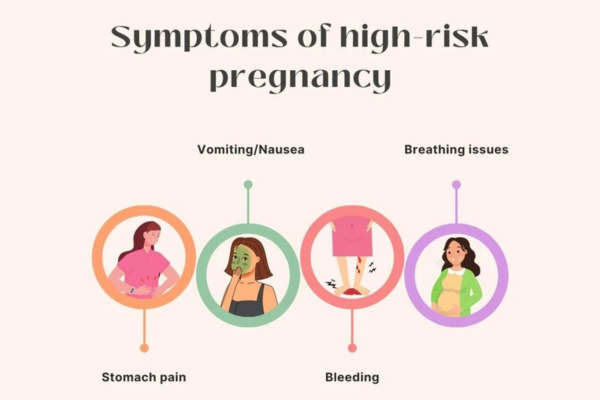
Warning Signs During Pregnancy That Require Immediate Attention
Regardless of whether your pregnancy has been classified as high-risk or not, every expectant mother should know the warning signs that demand urgent medical attention. Dr. Vanisree Padige at Sri Sai Women & Children's Clinic, Gopanpally, urges all her patients including those from Nallagandla, Tellapur, and Serilingampally to seek immediate care if they experience any of the following:
Seek Emergency Care Immediately For
- Severe headache that does not resolve with rest or paracetamol
- Sudden or severe swelling of the face, hands, or feet
- Visual disturbances blurring, flashing lights, or seeing spots
- Chest pain or difficulty breathing
- Severe abdominal pain or persistent upper abdominal discomfort (especially under the right rib)
- Heavy vaginal bleeding at any stage of pregnancy
- A sudden significant reduction or complete absence of fetal movements
- High fever (above 38°C) with or without chills
- Leaking of fluid from the vagina before 37 weeks (possible premature rupture of membranes)
- Frequent, painful contractions before 37 weeks (signs of preterm labour)
- Fainting, dizziness, or loss of consciousness
Never delay seeking care for any of these symptoms. In high-risk pregnancies especially, early intervention can be the difference between a safe outcome and a critical emergency.
How Is a High-Risk Pregnancy Monitored and Managed?
The cornerstone of high-risk pregnancy management is more frequent, more thorough monitoring combined with targeted medical interventions tailored to the specific risks present. At Sri Sai Women & Children's Clinic in Gopanpally, Hyderabad, Dr. Vanisree Padige develops an individualized care plan for every high-risk patient based on her specific condition, gestational age, and clinical progress.
More Frequent Antenatal Appointments
While low-risk pregnancies may require monthly visits in the first two trimesters, high-risk pregnancies often need fortnightly or even weekly appointments particularly as the pregnancy advances. These visits allow the doctor to track blood pressure, urine protein, fetal growth, and the mother's overall clinical status closely and catch any deterioration early.
Advanced Ultrasound and Fetal Medicine
Ultrasound plays an especially critical role in high-risk pregnancy monitoring:
- Early Viability Scan (6–8 weeks): Confirms pregnancy location and heartbeat especially important in women with a history of ectopic pregnancy or miscarriage.
- NT Scan (11–13 weeks): Nuchal Translucency scan screens for chromosomal abnormalities including Down syndrome, along with early structural assessment.
- Anomaly Scan (18–20 weeks): Detailed structural survey of the baby checks all organ systems for abnormalities.
- Fetal Growth Scans (28 weeks onwards): Regular assessment of baby's growth, amniotic fluid levels, and placental function essential for detecting fetal growth restriction.
- Doppler Studies: Measures blood flow through the umbilical cord and fetal brain arteries, a critical tool in monitoring compromised fetuses and deciding the timing of delivery.
- Biophysical Profile (BPP): Combines ultrasound assessment of fetal movement, tone, breathing, and amniotic fluid with a non-stress test used in the third trimester to assess fetal well-being.
Dr. Vanisree Padige's specialization in fetal medicine the dedicated study of fetal health, growth, and well-being means that Sri Sai Women & Children's Clinic in Gopanpally is uniquely equipped to provide this advanced level of monitoring for high-risk pregnancies across Hyderabad.
Specialist Blood Tests and Laboratory Monitoring
- Regular blood pressure monitoring and 24-hour urine protein collection (for preeclampsia surveillance)
- Serial blood glucose and HbA1c measurements (for gestational or pre-existing diabetes)
- Thyroid function tests (TSH, T3, T4) repeated each trimester in women with thyroid disorders
- Complete blood count for anaemia a very common problem in Indian women during pregnancy
- Clotting studies for women with antiphospholipid syndrome or bleeding disorders
- Cervical length measurement by transvaginal ultrasound for women at risk of preterm labour or cervical insufficiency
Medical Interventions Specific to High-Risk Conditions
- Low-dose Aspirin: Prescribed from early pregnancy to reduce the risk of preeclampsia in women with risk factors including previous preeclampsia, chronic hypertension, diabetes, or kidney disease.
- Progesterone Supplementation: Vaginal progesterone is used to reduce the risk of preterm birth in women with a short cervix or previous preterm delivery.
- Cervical Cerclage: A stitch placed in the cervix to prevent premature opening in women with cervical insufficiency typically performed between 12 and 14 weeks.
- Corticosteroid Injections: Given between 24 and 34 weeks when preterm birth is threatened accelerates fetal lung maturity to improve outcomes if the baby is born early.
- Insulin or Oral Hypoglycaemics: For tight blood sugar control in gestational or pre-existing diabetes.
- Antihypertensive Medications: To manage chronic or gestational hypertension safely during pregnancy certain antihypertensives are safe in pregnancy while others must be avoided.
- Anticoagulation Therapy: Low-molecular-weight heparin (LMWH) injections for women with antiphospholipid syndrome, previous DVT, or thrombophilia to prevent clotting complications.
Delivery Planning in High-Risk Pregnancy
One of the most important conversations in a high-risk pregnancy is planning the timing and mode of delivery. This decision is never made in isolation it is a thoughtful, evidence-based discussion between you and your specialist, taking into account the specific risks present, the baby's condition, the gestational age, and your own preferences and history.
Timing of Delivery
In some high-risk conditions such as uncontrolled preeclampsia, severe fetal growth restriction with abnormal Doppler studies, or placenta previa early delivery before the due date may be medically necessary to protect the mother or baby. The threshold for early delivery depends on the severity of the condition and the gestational age. Every week of gestation gained is valuable the goal is always to reach the safest gestational age for delivery while protecting both lives.
Mode of Delivery
Not all high-risk pregnancies require a caesarean section many women with high-risk conditions can safely deliver vaginally. However, certain conditions including placenta previa, certain fetal malpresentations, previous uterine surgery, severe fetal compromise, or very preterm delivery may necessitate a planned or emergency caesarean. Dr. Vanisree Padige at Sri Sai Women & Children's Clinic, Gopanpally, discusses the mode of delivery candidly and comprehensively with each patient, ensuring the final plan prioritizes safety while respecting the mother's birth preferences wherever possible.
The Emotional Side of a High-Risk Pregnancy
Living with the label of a "high-risk pregnancy" can be emotionally exhausting. Anxiety, fear, guilt, and hypervigilance are completely understandable responses and they deserve as much attention as the physical management of your condition. Many women with high-risk pregnancies feel they cannot allow themselves to enjoy the pregnancy, constantly bracing for bad news. This is a real and valid emotional burden.
Here is what helps:
- Stay informed understanding your condition reduces fear. Ask Dr. Vanisree Padige every question on your mind. No question is too small.
- Build your support system lean on your partner, family, or trusted friends. You do not have to carry this alone.
- Limit excessive searching on the internet not all information online is accurate or relevant to your specific situation.
- Practice mindfulness and gentle relaxation techniques prenatal yoga, breathing exercises, and guided meditation can be deeply calming.
- Consider professional psychological support if anxiety is persistent or overwhelming.
- Focus on what you can control your diet, your sleep, your appointments, and your relationship with your healthcare team.
- Celebrate small milestones every week of pregnancy is an achievement.
At Sri Sai Women & Children's Clinic in Gopanpally, Hyderabad, Dr. Vanisree Padige and her team take the emotional well-being of high-risk mothers as seriously as their clinical management. The clinic's warm, patient-first environment ensures that every woman whether from Gopanpally, Nallagandla, Serilingampally, Tellapur, or beyond feels heard, supported, and in safe hands.
What Can You Do to Support a High-Risk Pregnancy?
While your specialist manages the medical aspects, there is much you can actively do to optimize your pregnancy outcome:
- Attend every scheduled prenatal appointment do not miss or postpone them even when you feel well
- Take all prescribed medications exactly as directed never stop or change doses without consulting Dr. Vanisree Padige
- Monitor fetal movements daily from 28 weeks report any reduction immediately
- Follow a healthy, balanced diet tailored to your specific condition (e.g. low-GI diet for diabetes, low-salt diet for hypertension)
- Monitor blood pressure or blood sugar at home if instructed keep a log to share with your doctor
- Maintain regular gentle physical activity unless specifically advised to rest
- Avoid smoking, alcohol, and all unprescribed medications or herbal supplements without medical clearance
- Know the warning signs and act on them without delay
- Plan ahead for delivery know which hospital you will deliver at, have a bag ready from 34 weeks, and have emergency contact numbers ready
- Rest adequately do not underestimate the importance of sleep and relaxation in a high-risk pregnancy
Internal Links
- Comprehensive Maternity Care at Sri Sai Clinic, Gopanpally
- About Dr. Vanisree Padige – High-Risk Pregnancy Specialist in Gopanpally
- Book a High-Risk Pregnancy Consultation with Dr. Vanisree Padige
- Baby Movements During Pregnancy: What Is Normal?
Conclusion
A high-risk pregnancy is not a reason to panic it is a reason to be prepared, informed, and supported by the right specialist. With the right medical care, many women with high-risk pregnancies experience positive outcomes delivering healthy babies and recovering well. The journey requires vigilance, patience, and trust: trust in your body, trust in your medical team, and trust in the process.
High-risk pregnancy explained is not simply a medical topic it is a deeply personal story that unfolds differently for every woman. What remains constant is the need for expert care, early monitoring, honest communication, and compassionate support.
Dr. Vanisree Padige gynaecologist, obstetrician, and fetal medicine specialist at Sri Sai Women & Children's Clinic in Gopanpally, Hyderabad brings 16 years of dedicated expertise to every high-risk pregnancy she manages. With qualifications including MBBS, DGO, and MRCOG, and a special focus on high-risk pregnancy and fetal medicine, Dr. Vanisree Padige is among the most trusted specialists for complex pregnancy care in Gopanpally, Nallagandla, Tellapur, Serilingampally, and across Hyderabad. Her philosophy empowering women to make informed health decisions through clear communication and expert medical support ensures that every patient feels seen, safe, and genuinely cared for.
Do you have a high-risk pregnancy or concerned about pregnancy complications? Book a specialist consultation with Dr. Vanisree Padige at Sri Sai Women & Children's Clinic, Gopanpally today.
Call: +91 76750 24254